Building the Business Case: The Long-Term Value of a Utility Mobile App
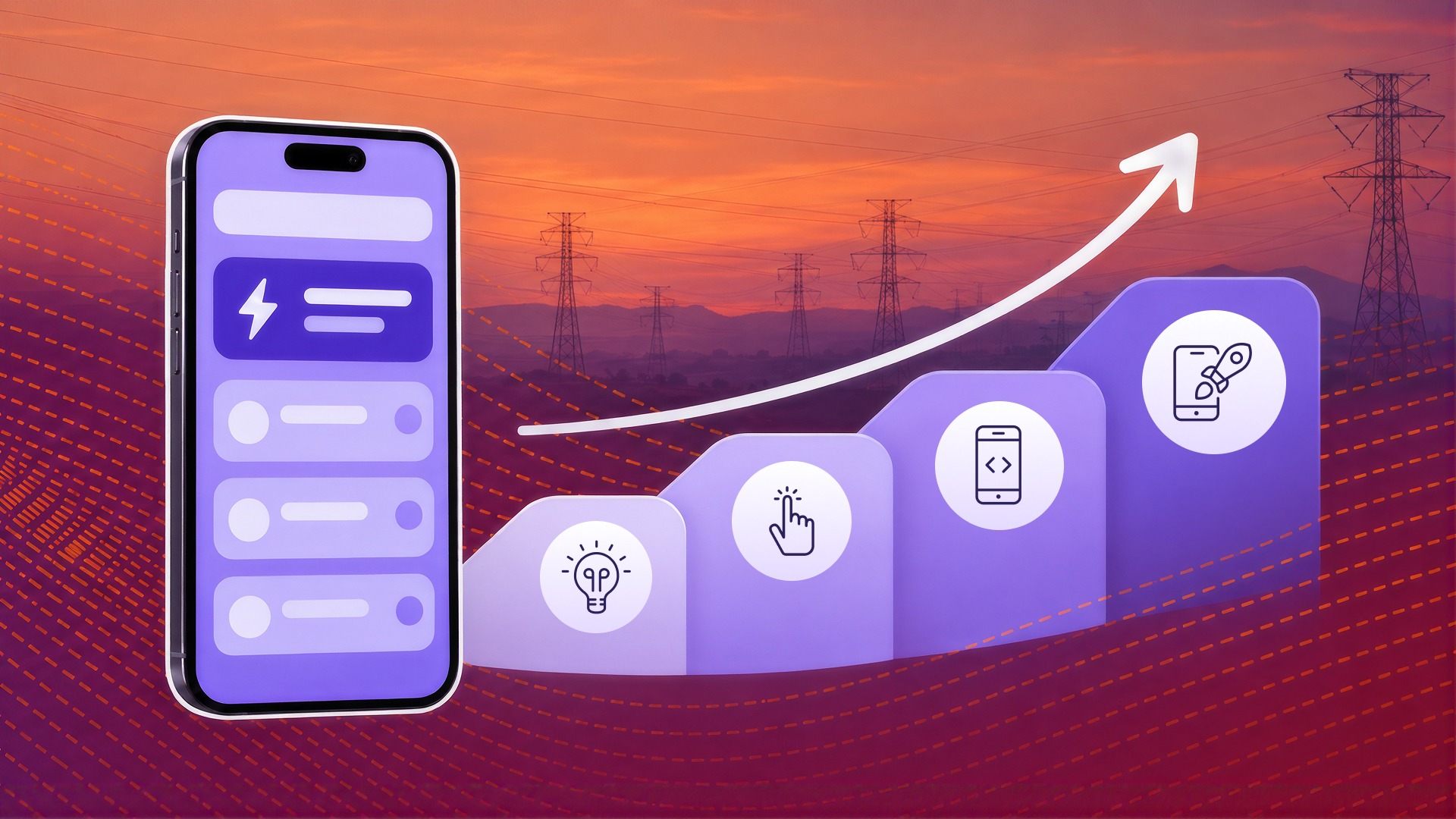
Part of Meter to Mobile, a series on building the business case for a utility mobile app.
A utility mobile app has to earn its place in the budget. Knowing that an app will help support customers is the easy part. Proving it is worth the spend, to the people who actually control the spend, is where most internal business cases stall.
That’s what this series is for. Each entry takes one question a utility team has to answer before it can move forward with a new mobile application, and works through it with real numbers you can bring to your own stakeholders:
- The cost case: How much does a mobile app actually reduce customer service and operational costs?
- The financial value case: Where does a mobile app create direct financial value?
- The satisfaction case: What does a mobile app do to customer satisfaction scores?
- The long-game case: How do you justify a mobile app investment whose biggest payoffs build over time? (You’re reading it.)
The first three pieces each answered a “what”: what an app saves, what it earns, and what it does for satisfaction. This one answers “when” the investment will deliver returns.
Part 4: Why a Utility Mobile App Pays Off Over Time
A mobile app does the most for a utility a few years after launch, not in its first months. The app you release matters, but the version that pays off the most is the one running two or three years in, with most of your customers on it and features you haven’t built yet. The returns keep climbing as it matures.
That’s the challenge of the long-game case. The spending comes first and the biggest payoffs come later, which makes a mobile app easy to defer and, if you understand how the value builds, one of the better reasons to start now. The delay isn’t a drawback, it’s the nature of the investment.
A mobile app is a platform, not a one-time project.
The first launch builds the foundational feature set: account management, billing and payment, usage, and outage. Everything after that is built on top of what’s already there.
That matters for the budget, because that groundwork is the most expensive part, and you pay for it once. Everything that comes later is an addition to something that already works, which is why the roadmap tends to accelerate rather than repeat the heavy lifting.
From the foundation, the app grows into the capabilities that deepen the relationship and open new value: program and rate-plan enrollment, personalized usage insights, a marketplace, demand response, EV and time-of-use features. None of those require rebuilding the core, so each one costs a fraction of what the first launch did.
How a utility mobile app’s value compounds over time
The savings, financial value, and satisfaction all grow as adoption grows. The more customers who self-serve, the more calls leave the queue and the deeper the cost savings run. Financial value follows the same curve, climbing as people enroll in paperless, pay on time, and sign up for programs in the app. And satisfaction quietly builds underneath all of it, as the app turns into the channel customers reach for first.
None of these peaks at launch. They build on each other, year over year, as customers engage and get more done through the app.
Part of what drives that is the app itself changing character over time. It starts transactional, the place a customer goes to pay a bill or report an outage. As it matures, it becomes collaborative and personalized: usage insights tailored to a household, recommendations that help a customer lower a bill, nudges that fit how that specific person uses energy. A transactional app earns satisfaction by being useful in a pinch. A personalized one earns it continuously, which is why the relationship, and the value that comes with it, strengthens the longer the app is in a customer’s hands.
The three also feed each other. A customer who gets a helpful outage alert is more satisfied, and a more satisfied customer is more likely to keep the app. A customer who keeps the app is the one who later enrolls in paperless, pays through it, and answers a demand response notification. Each positive experience makes the next action more likely, and each action feeds a different line of the business case. One satisfied customer can show up on all three ledgers: a call they didn’t make, a program they joined, a relationship that deepened.
We’ve seen this play out in the utility apps we’ve built. The gains rarely arrive at launch. Call volume keeps falling, and in-app transactions keep climbing as adoption grows, year over year, which is exactly the pattern the long game depends on.
The cost of waiting to launch a utility mobile app
Follow that logic one step further. If the value accumulates over time, then the clock on that accumulation only starts the day you launch. A utility that waits a year delays the app, but it also delays the compounding and gives up the year of accumulated value it would have been building toward.
The strongest reason to start now isn’t that the first year is lucrative. Often it isn’t. It’s that every year of waiting is a year the curve never gets to climb. The payoff is back-loaded, which means the sooner you begin, the sooner those high-return years arrive.
What long-term mobile app value requires
Compounding returns assume the app is treated as an ongoing commitment rather than a project that ships and goes quiet. The value builds only if the platform keeps improving, which means maintenance, a real roadmap, and a team or partner committed for the duration.
An app left to stagnate doesn’t compound. It decays, ratings slip, features fall behind, and customers drift back to the channels you were trying to move them off of. The long-term value is real, but it’s earned, not automatic.
The utilities that get this right treat the first launch as a starting point. When we built the app for LG&E, KU, and ODP, their VP of Customer Services described the goal as “a foundational app that we can enhance to continue meeting our customers’ future needs,” and the work has continued past launch with ongoing support and new features. Our team brings that mindset to how we approach utility mobile apps, and it’s what turns a launch into a compounding asset.
The full business case for a utility mobile app
Step back and the four pieces of this series are really one case. Cost savings get the app approved. The financial value makes it worth having. Satisfaction makes the relationship last. And time multiplies all three, turning a reasonable year-one case into a compounding return that a short-term view doesn’t entirely capture.
This is the kind of thinking we help utilities work through, connecting what an app does over its full life to a case you can take into the room. If you’re building the long-term side of that case, we’d love to connect. Get in touch with our team to start the conversation.
FAQ
What’s the ROI timeline for a utility mobile app? Returns show up in stages rather than all at once. The earliest are cost-related: calls and truck rolls that start dropping as customers adopt self-service. Enrollment and payment gains follow as more customers use the app for more things. The largest returns are the slowest: the compounding effect of high adoption, a maturing customer relationship, and added capabilities built on the original platform. A business case that only looks at year one will understate the return, because most of the payoff arrives in the years after.
Is a utility mobile app worth the long-term investment? It is when it’s treated as a long-term investment. The value compounds as adoption grows and features expand, so an app that’s maintained and improved returns far more over its lifetime than its launch numbers suggest. An app that ships and stagnates is a different story, which is why the commitment matters as much as the build.
How do you justify a mobile app whose payoff builds over time? By making the case on the full arc rather than the first year. Show the foundation as a one-time cost, and the capabilities that get cheaper to add once it exists. Then show the returns, cost savings, financial value, and satisfaction, growing together as adoption climbs. Over several years, that compounding is the argument.