Why Government Requests Get Lost and What Actually Fixes It
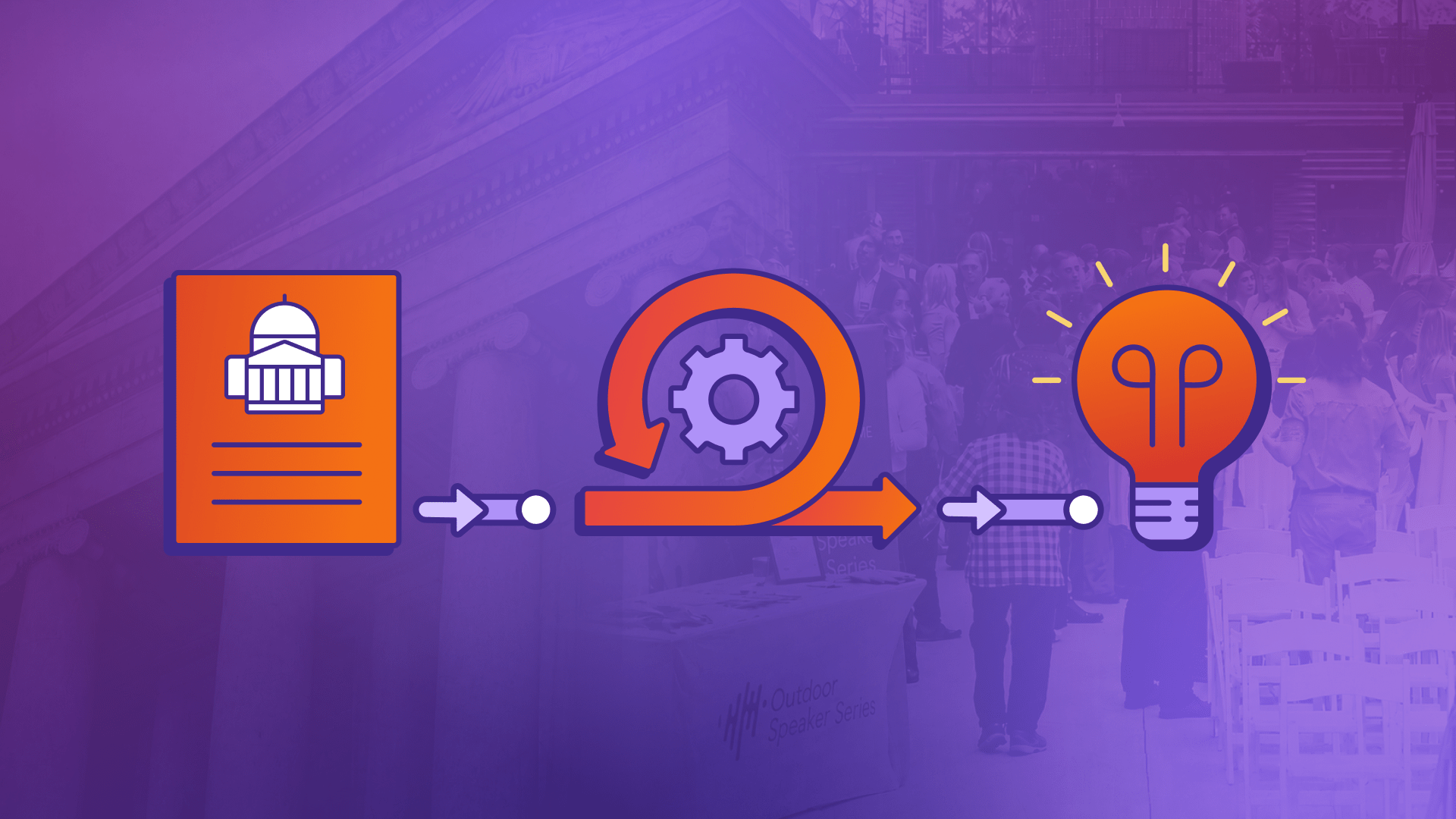
A resident submits a permit application, a benefits request, or a service ticket. The form works fine. The confirmation email arrives on time. And then…nothing. Weeks pass. No one can really say where the request is, who has it, or what’s holding it up — including, most of the time, the people who work there.
This is the failure mode that most government modernization efforts miss, or at least underestimate. For years, the instinct has been to fix the front door: new portals, better forms, chatbots that can answer basic questions. And while those investments matter, they fix one moment in the journey, and usually not the moment that needed fixing.
The journey is longer than the form
A single request moves through intake, routing, eligibility review, internal coordination, decision-making, communication, and resolution. Often across multiple systems and multiple teams, none of which were built to talk to each other. The portal is step one. Maybe even the easiest step. Everything that determines whether a resident actually gets an answer happens after they hit submit.
When agencies measure success by how smooth that first step feels, they end up optimizing the part of the journey the public barely notices. The real experience (and the real risk of things falling apart) lives in the middle. That’s a harder thing to fix, and harder to point to on a dashboard.
Where the breakdowns actually happen
A few patterns show up again and again in the examples we tend to hear about:
- Handoffs with no memory | A request moves from one system or team to the next, but the context doesn’t move with it. Someone re-asks questions the constituent already answered.
- Institutional knowledge that lives in one person’s head | The staff member who knows how a particular case type actually gets resolved is a single point of failure. When that person leaves or retires, the knowledge goes with them.
- No shared visibility | Neither the resident nor the agency can easily identify where a request currently sits or what’s blocking it.
- Duplicate work | The same data gets re-entered into multiple systems because those systems were never designed to share it in the first place.
This systemic disconnection only improves by connecting what already exists. The GAO has been flagging versions of this problem for years; its most recent annual report on fragmentation and duplication across federal programs is the 16th of its kind, which says something about how persistent this is.
Why “rip and replace” isn’t realistic or necessary
Every agency leader knows the constraint, even if they don’t say it out loud: legacy systems aren’t going anywhere soon. Budget cycles, procurement timelines, risk tolerance, mission continuity — all of it makes wholesale replacement slow at best, and disruptive at worst.
In our experience, the more practical path is a layer that sits between existing systems. One that can interpret what someone needs, apply the right logic, and route the request to the correct process, team, or database, all without requiring the underlying infrastructure to change. It’s a completely different strategy than “replace the core system.” It treats legacy infrastructure as a constraint to design around, not a problem to solve away.
Where AI is earning its keep
This is also where the AI conversation in government could use a bit more maturity. NASCIO’s most recent survey of state CIOs put AI at the very top of their priority list for the first time in the survey’s 20-year history, ahead of cybersecurity. So the appetite is there. The question is what actually works. The use cases delivering the most value right now tend to be narrower than the headlines suggest: interpreting what someone is asking for, routing it correctly, surfacing institutional knowledge before it walks out the door with a retiring employee, and coordinating handoffs across teams.
The use cases still stuck in pilot purgatory are usually the ones asking AI to fully own a decision end to end, with no human or system of record in the loop. That’s a much bigger ask, and the stakes are higher. The more durable pattern is orchestration: AI that interprets intent and coordinates action, while control stays where it belongs. That distinction is becoming the line between AI programs that scale past a pilot and the ones that stall out.
What “good” really looks like
A well-designed “one front door” experience is only as good as what’s operating behind it: the systems, the data, and the workflows it’s coordinating. You can have the most polished interface in government, and it won’t make much of a difference if the request still disappears after it’s submitted.
And the way agencies measure success probably needs to shift too. The metrics that matter most are usually the harder ones to get to – time to resolution, how much rework a case requires, how much manual burden comes off frontline teams — rather than the easy ones like uptime or tickets closed. They’re just less convenient to put on a dashboard.
Where this leaves agencies
At the end of the day, the fix isn’t a better front end, and it isn’t a smarter AI model working on its own either. It’s the connective work in between: linking what already exists, preserving institutional knowledge before it walks out the door, and giving requests a clear, visible path from intake to outcome. It’s not glamorous work. But it does play a critical role in whether someone gets their answer.
This is the problem Mindgrub Technologies solves alongside agencies through Decision OS, our AI-driven decision orchestration layer, which connects fragmented systems through a single conversational interface, without requiring a system-by-system rebuild.
CIOs, CDOs, and modernization leaders will explore exactly this at our next Outdoor Speaker Series: where journeys break down, what AI is actually delivering, and what it really takes to build one front door. Practical lessons and real tradeoffs, not product demos. Spoiler alert: the agencies that get this right won’t be the ones with the best portal; they’ll be the ones that fixed what happens after someone hits submit.