It’s tempting to view an app store rating as just another metric, a number that changes slightly with your latest software update. But in my work with utility leaders, I’ve seen that number take on a much bigger role.
Today, your app rating is often the first signal customers see about your brand’s reliability. It appears before they download, log in, or interact with your service. Increasingly, it shapes their expectations from the very beginning.
Lately, when I talk to utility teams, a new reality keeps coming up. For years, utilities could rely on a “silent majority” of happy customers to keep their ratings average afloat, even as a few vocal critics posted one-star reviews. But that balance has changed. Customers are increasingly expressing their dissatisfaction with high bill costs and service delivery within the mobile channel as it is highly visible.
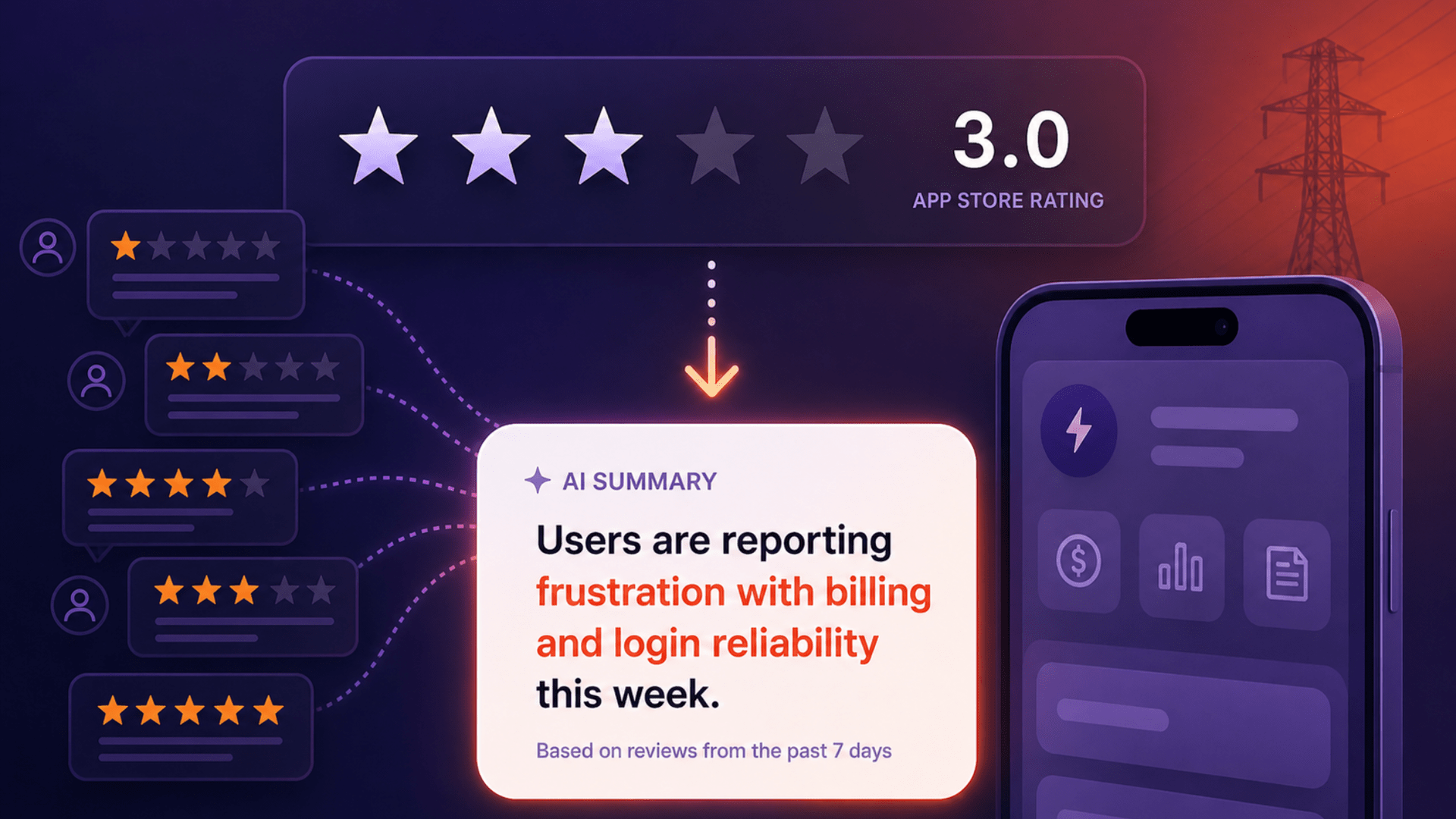
Starting in March 2026 with the release of iOS 18.4 and fully rolling out this year, the Apple App Store will include AI-generated review summaries. Google Play has also been rolling out this feature. With this update, customers will no longer have to read through screens of feedback. Instead, they will see a single AI-written paragraph highlighting the most common recent complaints and praises. If twenty people are upset about a billing issue after a rate hike, that becomes the story regardless of how many thousands of customers remain silent. AI-generated app summaries are already visible through major search engines and generative AI tools such as ChatGPT. Customers may already be using these tools to both identify if an app is available as well as conduct research as to whether they should download an app.
From my perspective, this changes the equation. Managing your rating is no longer enough. You also have to manage the story being told.
Why the App Store is the New “Front Door” for Frustration
At Mindgrub, I recently worked with the team to review 80 utility mobile apps to compile our annual Utility Mobile App Benchmark Report, and the results were telling. Only about 32% scored above 4.5 stars. Interestingly, the biggest drops in ratings often have nothing to do with bugs or broken features. We’re seeing a clear “Rate Hike Effect.” When rates go up, app ratings go down. Customers are using the App Store to express concern and frustration about their rising bills, even when the app itself is performing well.
This dynamic raises the stakes for every interaction. When a customer is already stressed about their bill, even a small inconvenience can feel amplified. A slow login or a brief delay becomes more than a minor issue. It becomes part of a larger frustration.
This is why I tell utility users that their app performance isn’t just an IT problem. It directly affects operations, customer experience, and brand perception. What happens in your app can influence call center volume, customer sentiment, and how your organization is viewed externally.
Three Strategic Non-Negotiables
In our latest playbook, we’ve outlined 12 specific tactics to improve these ratings. I believe these three shifts are the most critical:
- Ask for feedback when things are going well: We often talk about when to trigger a review prompt, but we should really be talking about the customer’s mood. Don’t ask for a rating when someone reports an outage or encounters a failed payment. Our data shows that the best results come after a “success state”, such as a customer successfully setting up AutoPay or checking their usage trends.
- Stability is a form of Customer Service: High-rated apps aren’t just the ones with the best features; they’re the ones that don’t crash. The best utility apps in the industry ship five to ten updates a year. When we treat bug fixes as just routine maintenance, we miss the point. For Product and Ops leaders, a stable, fast app is the most effective form of call deflection you have.
- Treat reviews like high-priority support calls: If an app store review sits there for a week without a response, it tells every other customer that you aren’t listening. I’m a big advocate for a “Response Playbook” in which your CX and Communications teams work together to respond to reviews quickly. It’s not just about solving one person’s problem; it’s about showing everyone else that there’s a human being on the other side of the screen.
The Bottom Line
A 4.7+-star rating isn’t a trophy; it’s a signal that your digital experience is meeting customer expectations.
More importantly, it builds a reservoir of goodwill. That goodwill becomes critical during high-pressure moments, whether it’s a major storm or a necessary rate adjustment.
We’ve put together a Playbook for Improving Utility Mobile App Store Ratings that digs into the details of how to make these shifts. My hope is that it helps your teams move beyond chasing stars and start building a digital reputation that reflects the quality of your hard work.