
Orchestrate decisions across your business with AI.
Mindgrub Decision Engine unifies your fragmented systems through AI in one easy-to-use interface, so you can maximize opportunities.

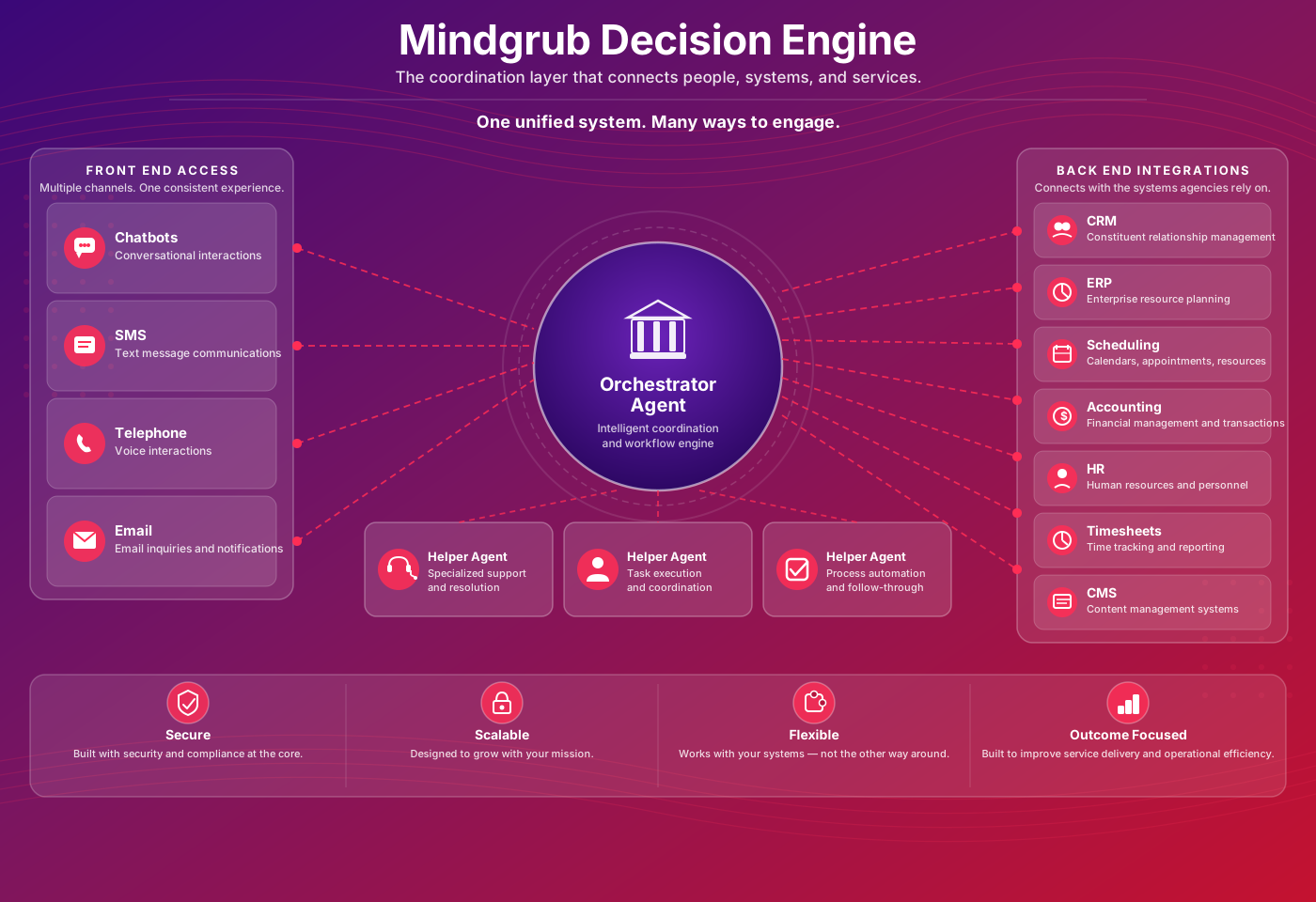
The AI solution for every industry.
From healthcare and higher education to retail and utilities, every organization is looking to implement AI in intelligent, custom, and long-term ways. The Mindgrub Decision Engine adds a layer of AI decision-making between legacy systems and a simplified interface.




Trusted by






What Mindgrub Decision Engine brings to your organization
Most organizations rely on multiple portals, legacy systems, and disconnected platforms. Decision Engine provides a single interface through chat, SMS, or voice that interprets intent and completes tasks across systems.
Whether it’s patient scheduling, student enrollment, or customer support requests, the interface reduces friction and improves satisfaction.
Decision Engine applies organization-specific rules in real time, ensuring:
- Compliance and policy enforcement
- Automated approvals and escalations
- Accurate data reconciliation
- Routing of exceptions to the correct team
Manual errors, slow approvals, and siloed decision-making are replaced with consistent, auditable operations.
Decision Engine orchestrates critical processes across departments, platforms, and user types. For example:
- Admissions, billing, or scheduling workflows
- Revenue cycle and financial approvals
- Customer or patient support lifecycle
- Resource allocation and capacity management
By automating workflows, organizations improve efficiency, throughput, and satisfaction simultaneously.
Many organizations operate with legacy or hybrid systems. Decision Engine acts as a bridge layer, reducing brittle point-to-point integrations and API maintenance while enabling phased modernization.
Fragmented systems hide bottlenecks and inefficiencies. Decision Engine provides dashboards and analytics for:
- Workflow performance
- Exception handling
- Resource utilization
- Revenue or enrollment tracking
Leaders gain actionable insights and can proactively improve operations rather than react to failures.